After four years of implementation, the VISIONARY project is coming to an end this year. The project aimed to support sustainable agriculture by promoting food system practices that have a low environmental impact, are economically viable, and are socio-culturally appropriate. The project has established 16 Science Policy Interfaces (SPIs), which have brought together relevant actors for various case studies coordinated within the project. Today, we would like to present one of the two SPIs we coordinated in the Brașov region, namely agri-food markets.
Brașov city is the main consumer hub for agri-food products in this region and, given the city’s tourist function and the crises threatening food security, it has a special interest in building a resilient and sustainable local food system. Agri-food markets are traditional distribution platforms for local and sustainable agri-food products, facilitating direct sales between producers and consumers. Their main objective is to support small agri-food producers, promote short supply chains, and strengthen the local community by offering a more “human” form of retail than supermarkets (as described by one participant in our study). There are six markets in the municipality, coordinated by the Brașov Public Market Administration Service, which is under the coordination of the Brașov City Hall.
At HCC, we have always emphasized the importance of supporting small producers in order to build a truly sustainable and resilient food system. However, until the VISIONARY project, we focused all our efforts on understanding the situation of small producers, the barriers and challenges they face daily in their work. VISIONARY brought a different research perspective, namely: how can we improve agri-food markets to increase the consumption of food purchased from these markets, from producers? Thus, we conducted a study funded by the project, in collaboration with Transilvania University of Brașov, over a period of two years, on more than 900 consumers in the municipality of Brașov to identify their preferences and consumption habits, motivations, and necessary improvements in the markets to attract a larger and more diverse consumer base.
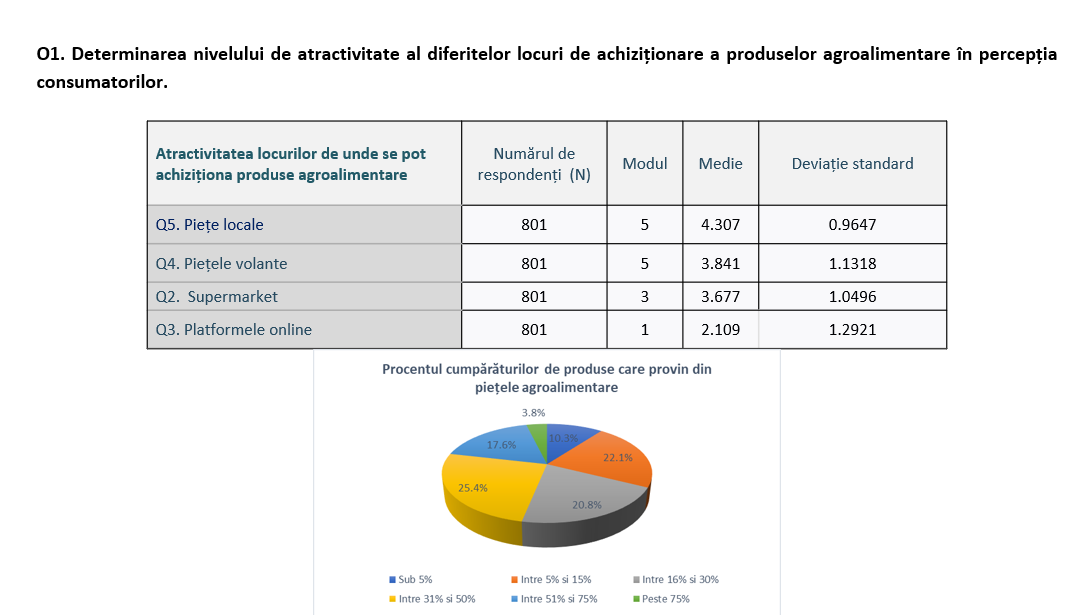
The study used a mixed methodology to obtain an overview as complete and accurate as possible. We conducted face-to-face interviews with customers of the city’s largest agri-food market, Dacia Market, as well as with supermarket customers and young people. We organized three focus groups, one dedicated to mothers in Brașov, who emerged as a target group, and two dedicated to the young, active population, who represent the future consumers of agri-food products in markets. The backbone of the study is a survey-based investigation conducted on a sample of 801 people, which measured the level of satisfaction with agri-food markets and purchasing habits. Finally, we experimented with neuromarketing techniques to explore the characteristics of agri-food markets that most appeal to participants.
Although the approach was mixed, the conclusions were consistent across all stages of the research. If you would like to delve deeper into the study, we invite you to read the report. In this article, we will focus on a few key aspects that emerged from the study:
- Although agri-food markets continue to be perceived as the main place of purchase for food for the general population, we note that the young and active population is migrating to supermarkets that are much better suited to the modern lifestyle: extended opening hours, diversity of products offered, parking spaces, and the possibility of paying by card. However, in the minds of consumers, the market remains the place for natural and authentic products sourced directly from producers.
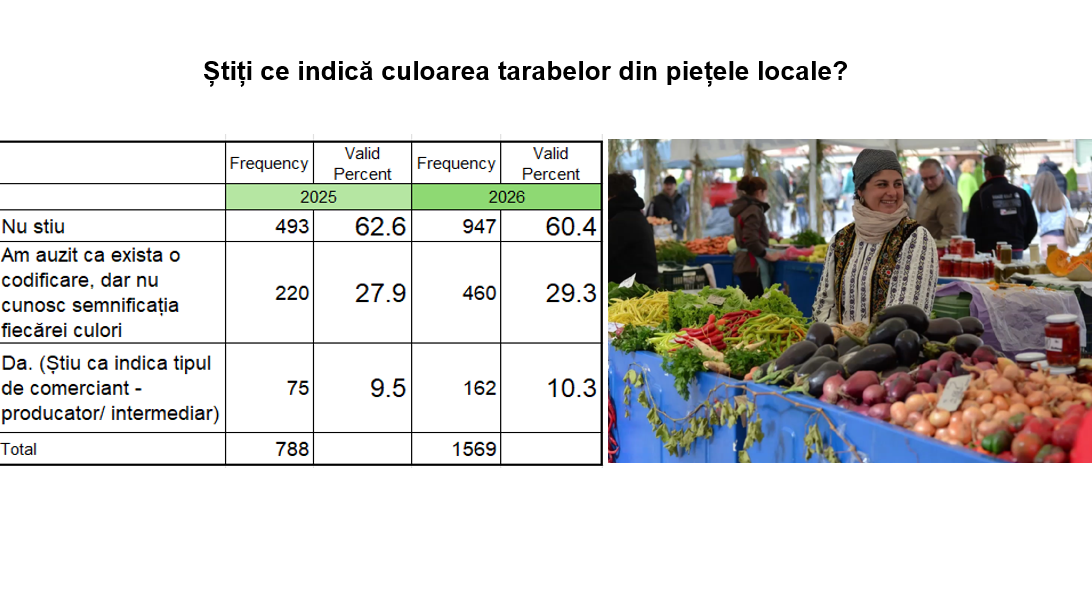
- The most common and important issue that emerged from the study is the lack of consumer information and education regarding the difference between authentic producers and intermediaries. Although measures have been taken at the administrative level to better identify local producers (certificates of authenticity issued by SPAP, colour coding of stalls), over 90% of the people participating in the study are unaware of this identification system. Therefore, better communication of these measures by the administration is needed, both physically (inside and around markets) and online (on the institutional websites of SPAP and the city hall, associated social media pages, etc.). This will help to strengthen consumer confidence in authentic agri-food products and support local production.
- Another important aspect is the need to improve market infrastructure. Better cleaning of the premises, the creation of additional parking spaces, and proposals for solutions to enable card payments were all mentioned in the study. At the same time, Brașov is one of the most visited cities in the country every year, and its markets (especially those in the city centre) have tremendous potential to offer tourists a taste of local cuisine. However, they need to be rethought and revitalized, emphasizing their social function of interaction between consumers and producers.
The attached study describes in detail both the research steps and the conclusions of each stage, providing at the end a list of strategic directions for improving agri-food markets. Some of these directions were discussed and debated at the last SPI meeting within the project, which we organized on February 11. The next step is to send the complete study to the competent authorities and offer our support to sustain agri-food markets in the future.
Blog post by Cătălin Rogozan.