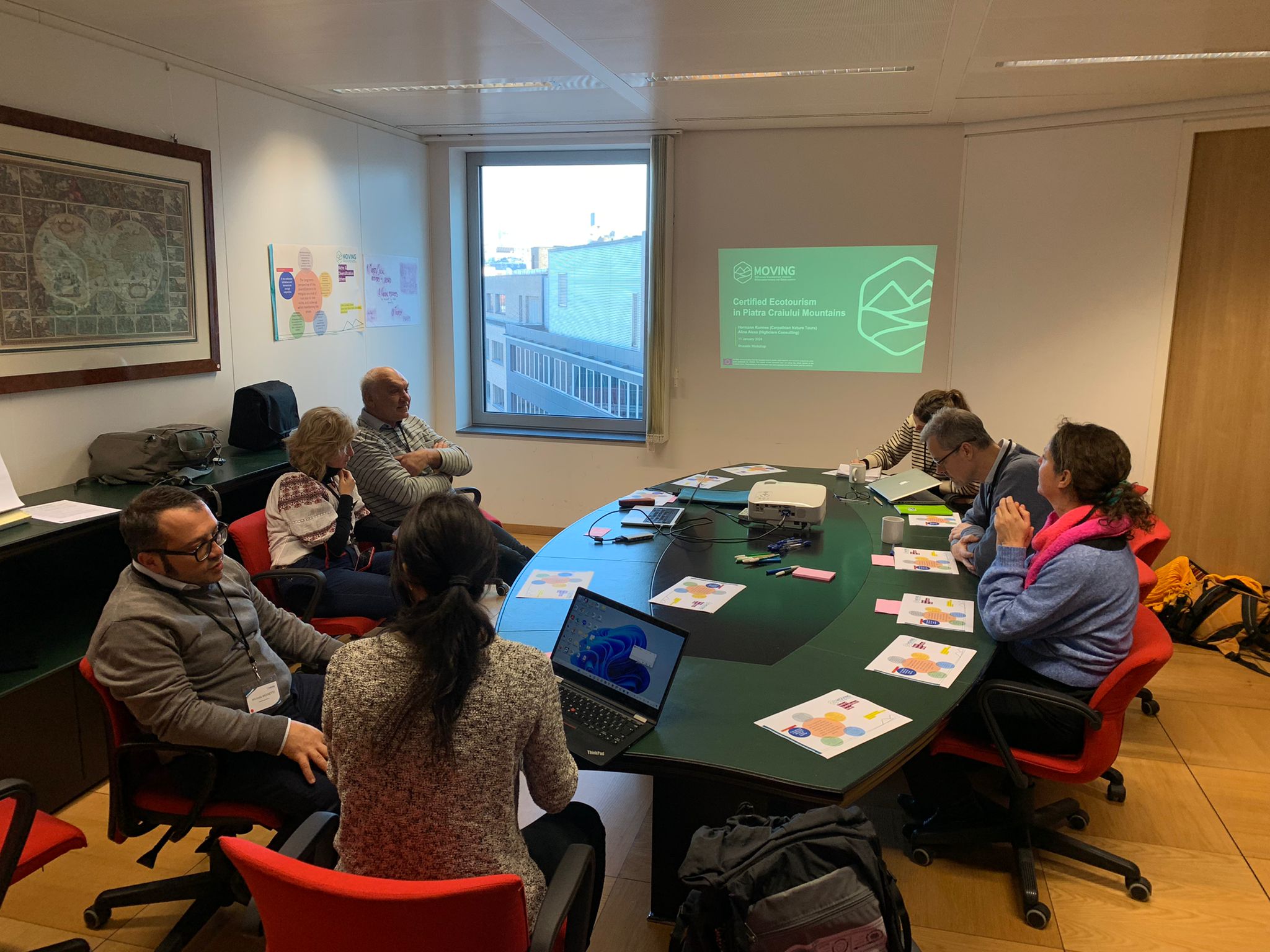
At a seminar organized last month in Brussels as part of the MOVING project, Highclere Consulting brought to the discussion on future public policies for mountain areas people who live in those regions and are very familiar with the challenges and needs of the local population. Thus, alongside more than 50 high-level European experts in the field of mountain regions, discussions focused on the future of mountain regions and on post-2027 EU policies designed to enable the development of these regions. The discussion took place as part of the European Foresight Workshop for Resilient Mountain Areas.
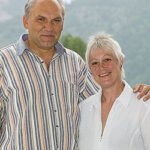
Hermann Kurmes, a resident of Măgura (Brașov) and a local entrepreneur, presented to the participants the ecotourism business model he has developed over the past 25 years: he runs a guesthouse and organizes guided nature tours, both of which are certified as ecotourism businesses. He is also a founding member of the Romanian Ecotourism Association.
During the discussions, he was invited to propose possible solutions to the problems he faces: poor infrastructure (roads and sewage systems), a lack of prospects for young families, low interest in collaboration and cooperation, and a lack of interest on the part of local authorities in resolving issues in these areas. Another major issue discussed was the need to train local residents to develop the skills necessary for the area’s development: management, digitalization, HORECA services, etc.
“The most important thing for me in the Măgura–Piatra Craiului area is balancing environmental conservation with the involvement and support of the local community: joint activities with the school in Măgura (village cleanup, summer programs with students), and organizing festivals and dances. Without support for traditional local practices (carried out by the locals), livestock farming is gradually being abandoned, leading to the disappearance of pastures and changes to the landscape that drive nature- and culture-based tourism in the area. Furthermore, the disappearance of traditional practices can also lead to the disappearance of certain species and habitats, with the greatest threat to them being the reforestation of grasslands,” said Hermann Kurmes.
“I have always supported the local community; all my employees are from the village, and a large portion of the food served is locally sourced. I also produce honey, jams, and syrups in the mountainous region (these can be purchased at the guesthouse or at souvenir shops in the city of Brașov).”
There is one more important thing to mention: the entire team at Carpathian Nature Tours (along with interested locals) is actively involved in local, county, and national governance in the area, fighting to protect biodiversity, to develop access routes to the area and municipal infrastructure (in a sustainable manner), to protect the landscape, and to educate children about the importance of mountain areas.
Alina Alexa, Highclere Consulting